Listen to this guide
Narrated edition
If you need emergency roof repair in Florida, do five things in this order: get people and electricity out of the water's path, contain what is coming in, relieve any ceiling bulge, photograph everything, and call a licensed roofer for a same-day tarp. Water moving through a house keeps doing damage as long as it runs. Almost everything else about the situation can wait until the roof is stable and dry — including every decision about the permanent repair.
This is the first-hour playbook we walk our own callers through, followed by what emergency work actually costs, and the two Florida laws written to protect people at exactly the moment their roof has a hole in it. If water is coming in as you read this, call 407-214-4872 and start on step one while you wait.
The first hour, step by step
- Move people, pets, and power out of the water's path. If water is anywhere near a light fixture, an outlet, or your panel, switch off the breakers for those rooms before you touch anything else. A wet ceiling around a light fixture is an electrical problem before it is a roofing problem.
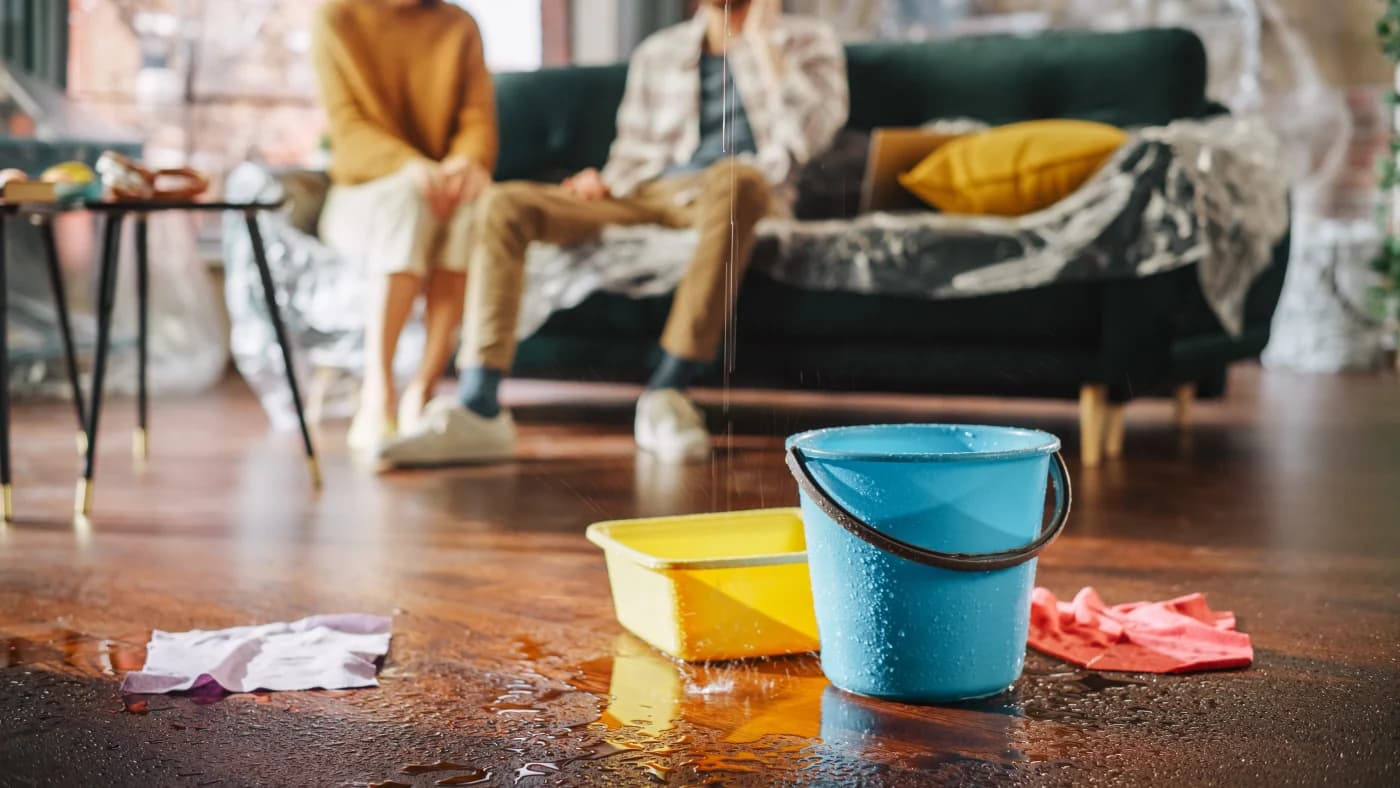
- Contain what is coming in. Buckets under the drips, towels around them, furniture and electronics slid clear, rugs pulled up. If a drip scatters off the ceiling, tape a length of string at the drip point and run it into the bucket — the water follows the string down instead of spraying.
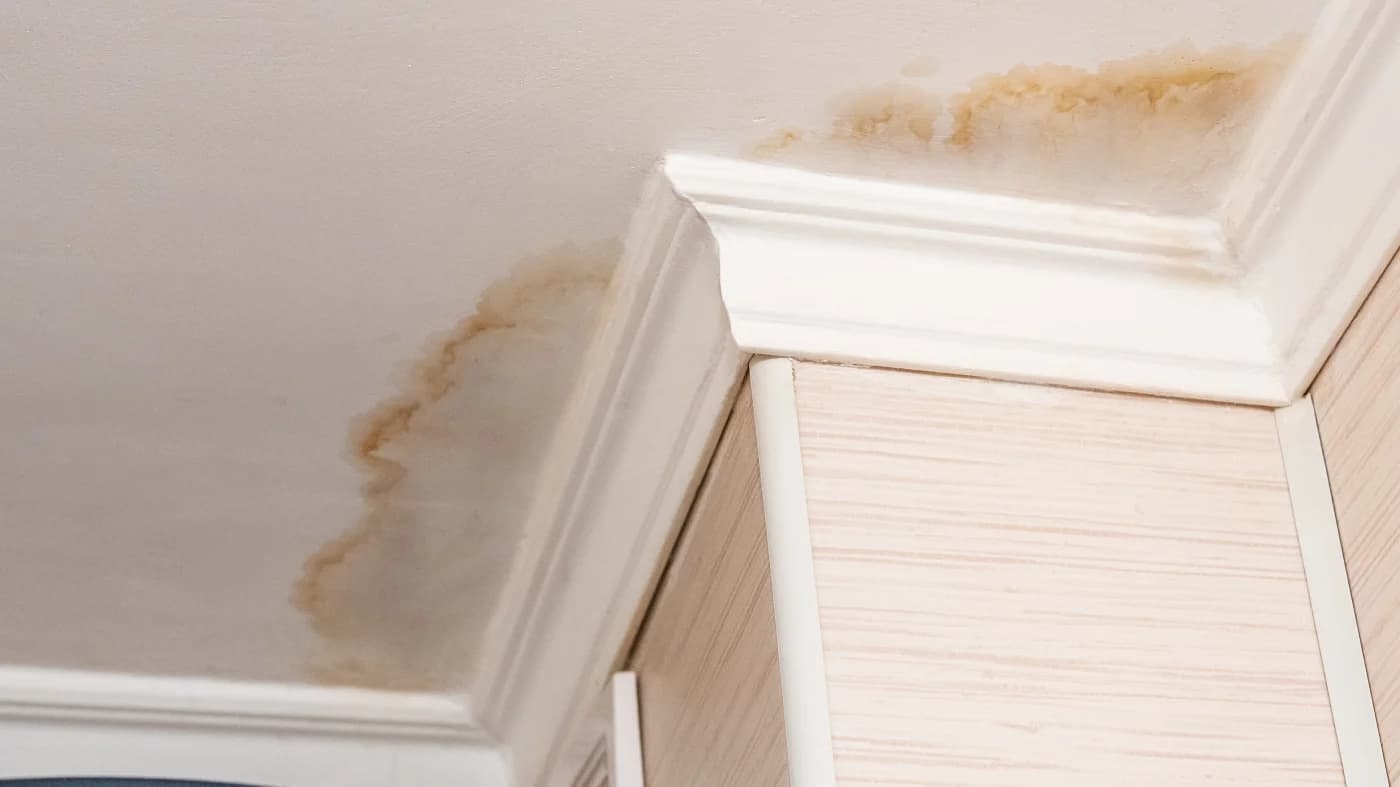
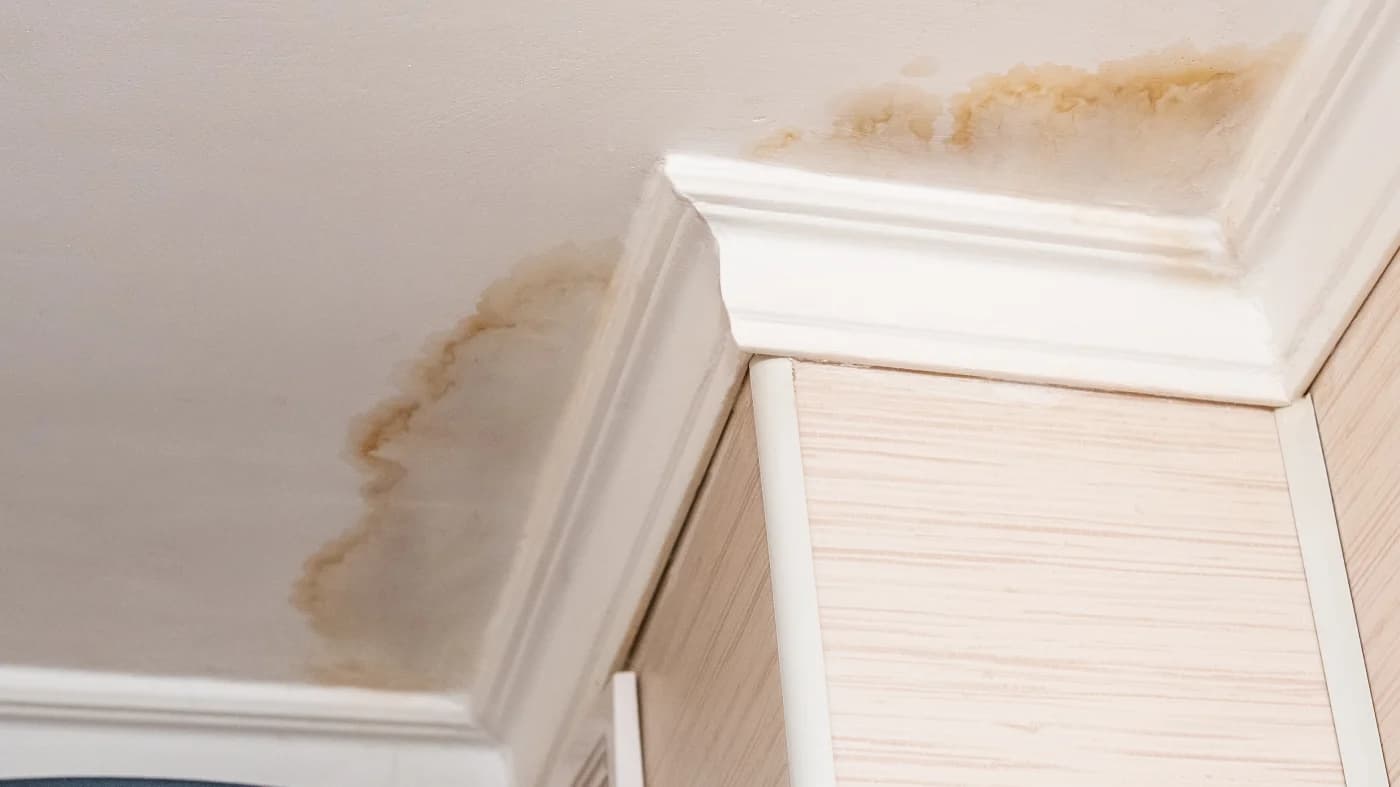
- Relieve a bulging ceiling. Water pooling on top of drywall stretches it into a belly, and left alone it comes down all at once. Put a bucket underneath and push a small hole through the center of the bulge with a screwdriver. Draining it in a controlled way costs you one patchable hole; a saturated ceiling collapse costs you the room.
- Photograph and video everything, with timestamps. The active leak, the ceiling, every affected room and item, and — from the ground only — the roof itself. You cannot over-document. Whoever does the permanent work will plan it from what you capture tonight.
- Call a licensed roofer and ask for same-day tarping. Not a handyman, not whoever knocks first. The goal today is stabilization; the diagnosis and the lasting repair come when the weather clears and the roof can be walked safely.
Is it an emergency, or can it wait until morning?
Active water inside is an emergency. A breach you can see daylight through is an emergency. A stain that only appears during wind-driven rain is urgent, but it is not tonight's problem. The honest triage looks like this:
| What you're seeing | Treat it as | Why |
|---|---|---|
| Water actively dripping or flowing inside | Emergency — act now | Interior damage keeps spreading while water runs; wet ceilings fail without warning |
| Missing shingle sections or exposed decking after a storm | Emergency — tarp today | The covering is open; the next band of rain finishes the job |
| A visible sag or a bulging ceiling | Emergency — keep clear | Saturated material is heavy, and it fails suddenly, not gradually |
| A stain that shows up only in driving rain | Urgent — days, not weeks | Often a flashing failure, and it widens with every storm |
| Lifted shingle edges, granule loss, general age | Schedule an inspection | Real, but it belongs on a calendar, not a crisis line |
One Florida-specific note: in our summer rainy season, showers and thunderstorms come almost daily, so the next storm is usually a day away, not a week. "It can wait until morning" is often true. "It can wait until the weekend" usually is not.
Stay off the roof
The most expensive mistake in a roofing emergency is a fall. The second is walking a compromised deck. Wet shingles and wet tile are slick, storm-loosened material shifts underfoot, and decking that has been soaking is soft in ways you cannot see from above — a surface that looks walkable can give at exactly the spot the water has been working on. Crews bring fall protection and know where a roof carries weight. Your part of the job is from the ground: binoculars, photographs, and the phone.
The same goes for assessment. After a storm, the damage you can see from the driveway is rarely the whole story — lifted edges, broken seals, and punctures show up from the roof, not the lawn. Get the tarp on first; get the full picture right after.
What same-day tarping is — and what it is not
Professional emergency tarping is a temporary dry-in: a heavy tarp anchored over the breach so weather stays out until the permanent repair is made. Done properly it is not a blue sheet and a prayer: the tarp is anchored with sandbags or battened boards and lapped so water sheds over rather than under. A professional emergency visit should include the damage assessment, debris removal, the tarp installation, photos of what was found, and a written estimate for the permanent repair.
What it is not is a repair. A temporary tarp is a short-term fix: the Army Corps of Engineers' Blue Roof tarps, for example, are designed to last 30 days. The tarp buys you time to make the permanent decision carefully; it does not make the decision optional. Some roofers credit the tarp cost toward the permanent repair if you hire them for it; it is worth asking when you call. After a federally declared disaster, FEMA can assign the Army Corps of Engineers' Operation Blue Roof, which installs temporary roofing on eligible homes at no cost to homeowners; after Hurricane Milton it installed 8,296 blue roofs on Florida homes.
What emergency roof repair costs
Emergency work costs more than scheduled work, and a professionally installed tarp is a small cost next to the interior damage it prevents. The stabilization itself is the cheap part of the week:
| Work | Typical cost | What it covers |
|---|---|---|
| Roof tarp, standard install | A small cost next to the damage it prevents | Tarp, supplies, and labor on most one-story homes |
| Emergency after-hours tarping | More than a scheduled install | Typically assessment, debris removal, photos, tarp, and a repair estimate |
| Emergency service premium | Added to unscheduled work | Unscheduled dispatch; after-hours labor costs more |
| The permanent repair | A few hundred dollars to several thousand | Minor to major; a full replacement is its own decision |
Read that table as an argument for speed: a tarp tonight can prevent much larger bills for ceilings, flooring, and drywall over the following week. And the permanent repair has its own fork in it — whether to repair or replace is a genuine decision in Florida, with a building-code rule that can make it for you depending on your roof's age.
Two Florida laws that protect you after a storm
Once the Governor declares a state of emergency, Florida law gets sharply tougher on the people who show up in storm zones. Both of these are worth knowing before anyone knocks on your door.
Unlicensed contracting becomes a felony
Unlicensed contracting is illegal in Florida at any time — but under Fla. Stat. § 489.127(2)(c), doing it during a declared state of emergency is a felony of the third degree, not a misdemeanor. The state raised the stakes specifically because storm zones attract exactly this. Your two-minute defense: look the contractor up on the DBPR license search before anyone climbs a ladder. And be wary of anyone unsolicited at your door pushing you to sign paperwork on the spot — legitimate local roofers are busy after a storm, and none of them need your signature tonight.
Price gouging becomes illegal
Fla. Stat. § 501.160 prohibits unconscionable prices during a declared emergency, and its definition of "commodity" explicitly includes services — repairs included. The measuring stick is the average price charged in the 30 days before the declaration, so "storm pricing" that bears no relationship to last month's pricing is exactly what the statute targets. If a quote smells like the weather rather than the work, report it to the Florida Attorney General's price gouging hotline — and get a second quote.
Those protections switch on with a declared emergency. The ordinary ones — licensing, permits, inspections — apply every day of the year, and your local building department remains the authority on what the permanent repair will require.
After the tarp: getting to the permanent fix
Stabilizing bought you time; use it to make the permanent decision properly. The sequence that serves you best: a full inspection with photographs, a written scope of what failed and why, and then the repair-or-replace conversation with the facts in hand. Keep in mind that the spot where water shows up inside is often not below the spot where it got in — water travels along decking and framing before it drops — so a credible diagnosis names the entry point, not just the stain.
If the damage is isolated and the deck is dry, a repair closes the incident. If the roof is older or the damage is broad, the 25% rule and the four questions that decide repair-versus-replace are the next read. Either way, the person who tarped your roof should hand you photographs and a written recommendation — if they will not, that is information too.
We run same-day tarping across the Orlando, Tampa, and Jacksonville metros, and the inspection that follows is free — you keep the photos and the written report whether you hire us for the repair or not. Call 407-214-4872. And once the roof is dry and the dust settles, ten minutes of prep before the next storm is the cheapest roofing work you will ever do.
Statutory text is summarized from the Florida Statutes as published by the Florida Legislature — read § 489.127 and § 501.160 in full. Permit requirements for permanent repairs are determined by your local building department.

Universal Roof & Contracting
Florida roofing contractors since 1993
Three generations, family-owned, working Florida roofs from offices in Orlando, Tampa and Jacksonville. Everything here comes from what our crews actually find on roofs in this state — not from national roofing advice that assumes a milder climate.
Questions people ask
Is a leak in the roof an emergency?
If water is actively dripping or flowing inside, treat it as one — interior damage keeps spreading while water runs, and a saturated ceiling can fail without warning. A stain that appears only during wind-driven rain is urgent rather than an emergency: it is often a flashing failure and it widens with every storm, but it belongs on this week's calendar, not tonight's crisis line. In Florida's summer rainy season, showers and thunderstorms come almost daily, so the next storm is usually a day away, not a week.
How can I temporarily fix a roof leak?
From inside: contain the water with buckets and towels, move belongings clear, kill power to any room where water is near fixtures or outlets, and relieve a bulging ceiling by pushing a small drain hole through the center of the bulge over a bucket. Do not climb onto the roof — wet surfaces and storm-loosened material are how people get hurt. The real temporary fix is a professionally anchored tarp, installed the same day.
Can a roof be repaired in a day?
Many isolated repairs — a vent boot, a flashing detail, a small shingle section — are genuinely one-visit jobs once the roof is dry and materials are on hand. The emergency sequence is: stabilize with a tarp today, diagnose properly, then complete the permanent repair. Broad or systemic damage needs a full assessment first, because the visible damage after a storm is rarely the whole story.
What do I do if I can't afford to fix my roof?
Stabilize first and separate the two costs. After a federally declared disaster, the Army Corps of Engineers' Operation Blue Roof installs temporary roofing on eligible homes at no cost to homeowners. A professionally installed tarp is a small cost next to the interior damage it prevents, and it buys you a few weeks to arrange the permanent work properly. Financing options exist for the repair itself; ask about them when you call. What costs the most is letting an open roof sit, because water damage compounds while you wait.
How much does emergency roof repair cost?
Emergency work costs more than scheduled work, and a professionally installed tarp is a small cost next to the interior damage it prevents. The permanent repair afterward ranges from a few hundred dollars for a single vent boot or flashing detail to several thousand when water has reached the decking.
How long can a tarp stay on a roof?
Treat it as weeks, not months. The Army Corps of Engineers designs its Blue Roof tarps to last 30 days, so get the permanent repair on the calendar right away.
Who should I call first for emergency roof repair?
A licensed local roofer offering same-day tarping — and verify the license on the DBPR's free search before anyone climbs a ladder. Be cautious with anyone unsolicited at your door pressing for a signature on the spot. If the Governor has declared a state of emergency, Florida law is on your side twice over: unlicensed contracting becomes a third-degree felony, and price gouging on services becomes illegal under § 501.160.