Listen to this guide
Narrated edition
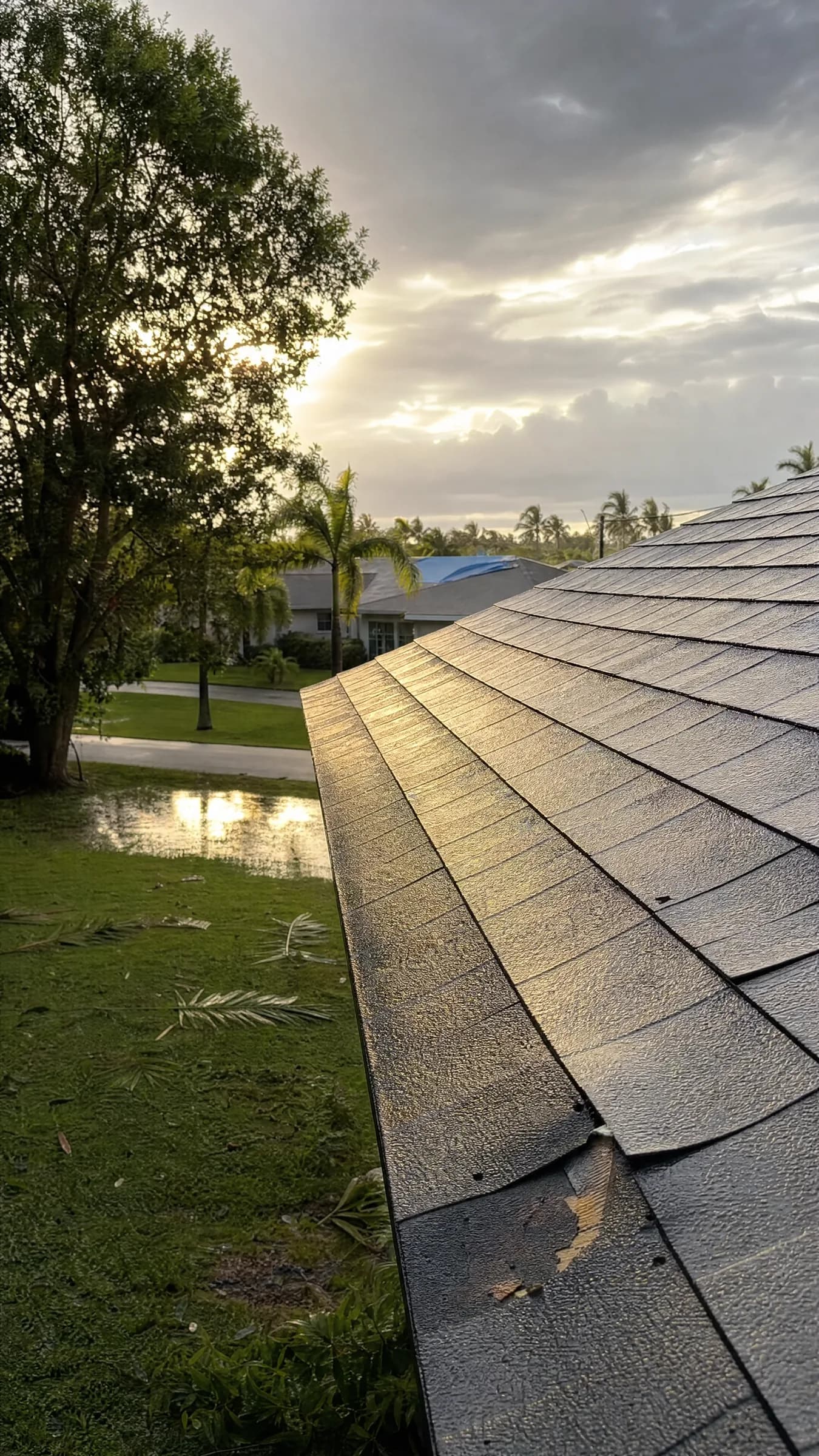
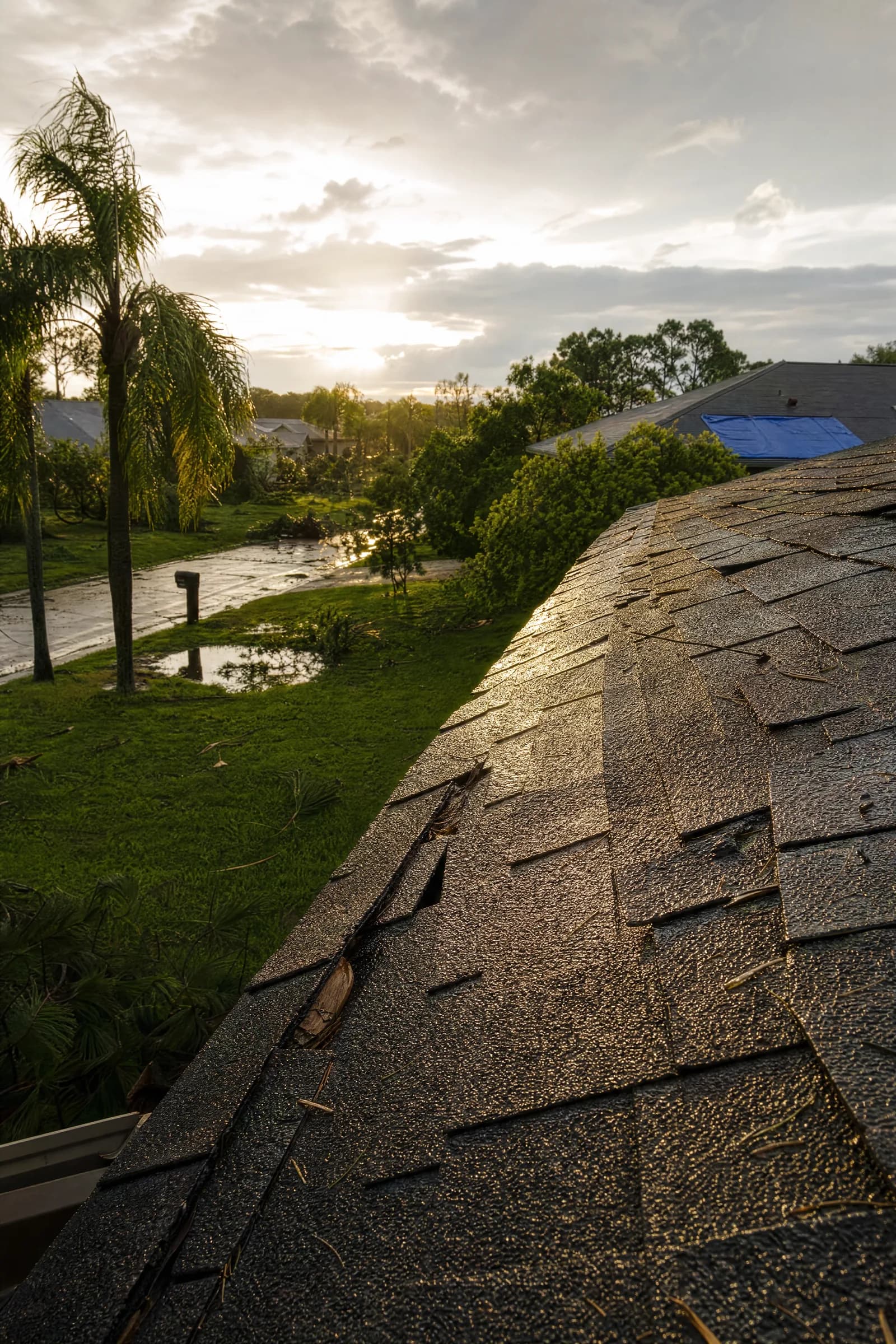
The storm damage that costs Florida homeowners money is usually invisible from the yard: broken seal strips, bruised shingles, lifted fasteners and hairline flashing separation. A roof can look untouched from the ground and still have lost wind resistance.
What actually breaks
Seal strips
Shingles are held down by nails and a heat-activated sealant strip, and the sealant plays an important part in wind resistance. Wind can break that bond without moving the shingle, so the roof can look intact and still have lost wind resistance. The next moderate gust can take the shingle that survived the first storm.
Bruising
Hail and debris impacts can fracture the mat beneath the granules without visibly breaking the surface. The damage shows up as accelerated granule loss over the following months.
Lifted fasteners
Uplift can back a nail out slightly, creating a small path for water and a raised spot that wears the shingle above it.
Flashing separation
Hairline movement at a chimney, wall transition or vent boot. Invisible from the ground and among the most common leak origins we find.
What you can safely check yourself
Stay off the roof — post-storm decks hide soft spots, and this is not worth an injury. From the ground:
- Scan the field, ridge and edges for missing, lifted or misaligned material
- Check gutters and splash blocks for granule accumulation — a pile means the surface took a beating
- Walk the yard for shingle fragments or displaced drip edge
- Look at ceilings and closet corners that night, and again a week later — storm water travels slowly
- Photograph anything unusual, with the date
Why waiting costs more
A broken seal strip is nothing until the next storm, when it becomes a missing shingle, and then an exposed deck, and then a rotted section that turns a repair into a replacement. Small openings can let in enough water to damage decking over time.
What we do
Same-week storm assessments, emergency tarping where a roof needs immediate protection, and a written, photographed report of what we found and what fixing it involves. No scare tactics and no inflated damage lists — if the roof came through fine, that is what the report will say.
Related: storm damage response · preparing before the storm.

Universal Roof & Contracting
Florida roofing contractors since 1993
Three generations, family-owned, working Florida roofs from offices in Orlando, Tampa and Jacksonville. Everything here comes from what our crews actually find on roofs in this state — not from national roofing advice that assumes a milder climate.
Questions people ask
How do I know if my roof has storm damage?
Check from the ground for missing or lifted material, granules in the gutters, debris in the yard, and interior ceiling stains that night and a week later. The damage that matters most — broken seal strips, bruising, lifted fasteners — is not visible from there, so a professional look is worth it after any significant storm.
What is a broken seal strip?
Shingles are held down by nails and a heat-activated sealant strip, and the sealant plays an important part in wind resistance. Wind can break that bond without moving the shingle, so the roof can look intact and still have lost wind resistance. The shingle that survived one storm can be the one that leaves in the next.
Should I get on my roof after a storm?
No. Post-storm decking can be compromised in ways you cannot see, and everything worth checking can be observed from the ground or by a professional. It is not worth the risk.
How soon should I have my roof checked after a storm?
Within days, if you saw significant wind, hail or debris. Small openings can let in enough water to damage decking over time, and early documentation is far easier than reconstructing what happened months later.
Does storm damage always mean a new roof?
No — a lot of storm damage is a targeted repair, particularly on a roof with service life left. What decides it is whether the damage is isolated and whether water reached the decking.
What should I photograph after a storm?
Anything unusual you can see safely from the ground, with the date: missing or lifted material, granule piles, debris in the yard, and any interior staining. Your ground photos plus a professional written assessment make the complete record.