Listen to this guide
Narrated edition
The highest-value hurricane preparation for a roof is boring: clear the drainage, fix loose material, seal the penetrations, and document the roof's condition before the season starts. None of it is expensive, and all of it is cheaper than the damage it prevents.
Do these first
Clear the drainage
Gutters packed with debris back water up under the roof edge, which is how fascia rots and how water finds the wall. In a hurricane, a blocked gutter is a dam. Clear gutters, downspouts and valleys before the season, not during the watch.
Fix what is already loose
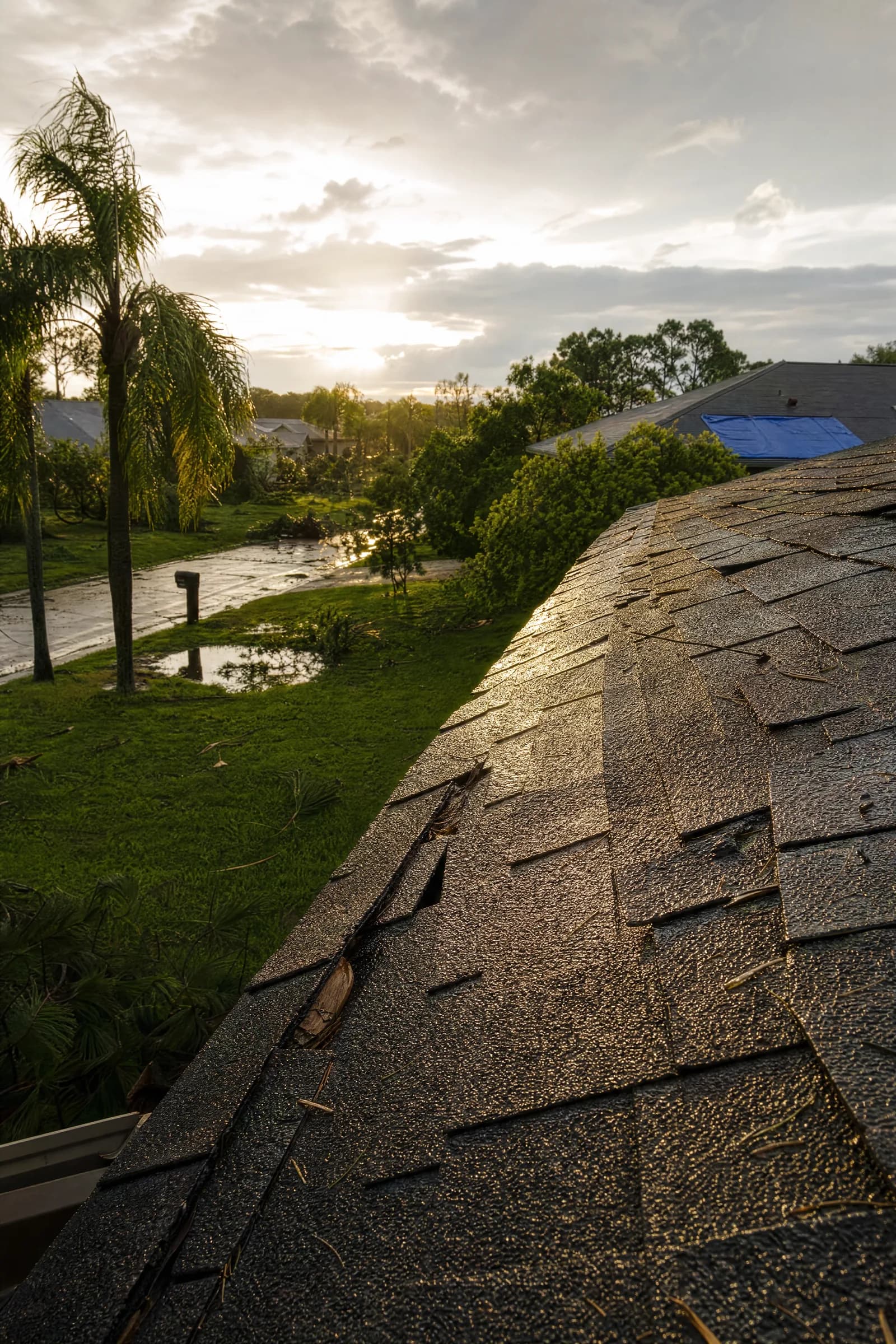
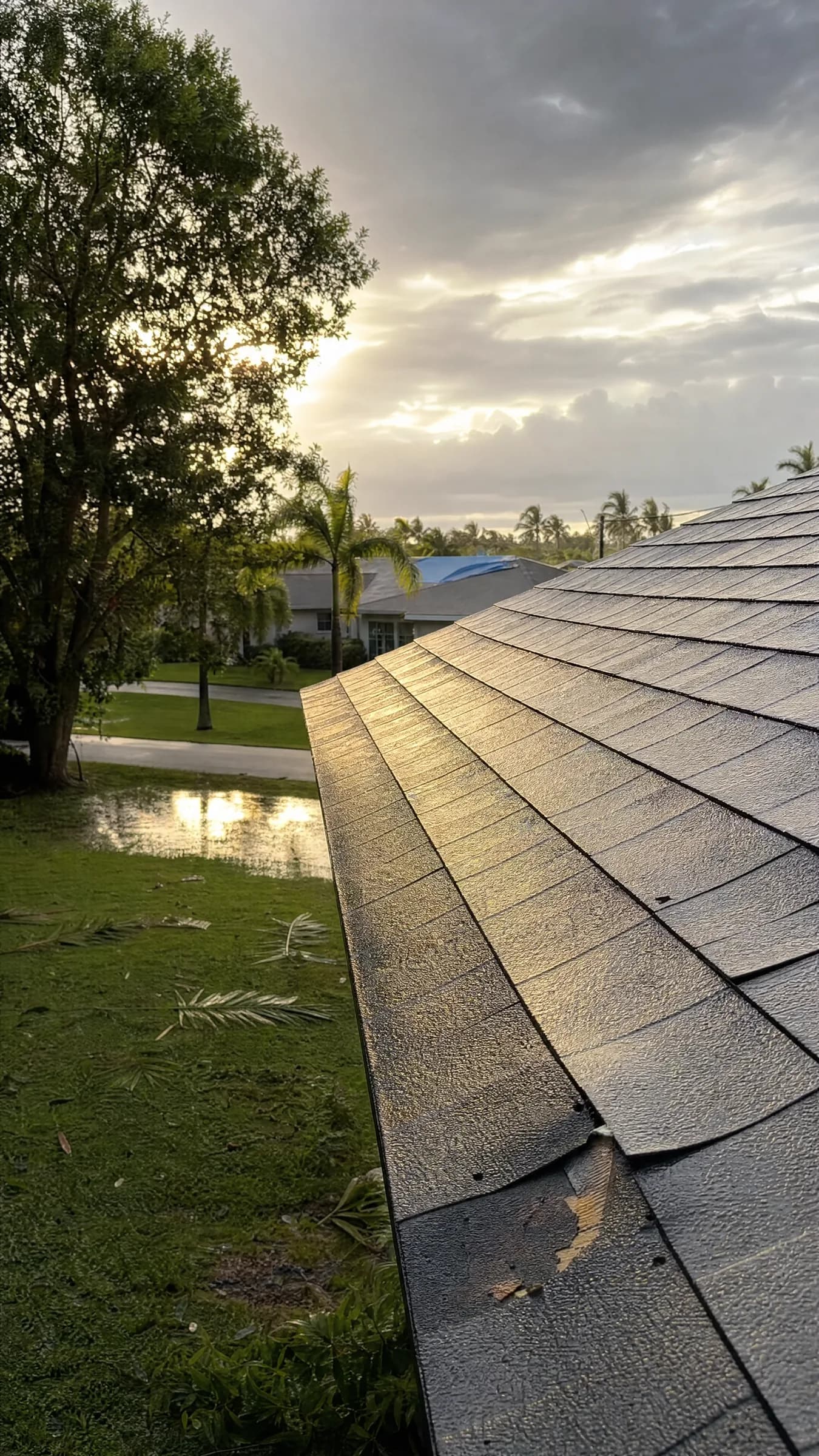
FEMA notes that the roof edge is more at risk from wind uplift and wind-driven rain than the rest of the roof. Anything lifted, cracked or missing, especially at an edge, gives the wind a place to start. A handful of lifted shingles repaired in May is a different outcome in September.
Seal the penetrations
Vent boots, flashing, and anything that comes through the roof. Cracked boots are among the most common leak sources we find, and they are cheap to replace before the water arrives.
Trim what overhangs
Branches that touch the roof scour granules in ordinary wind and become projectiles in a hurricane. Clear them well back.
Document before, not after
Photograph your roof's condition before the season. A dated set of pre-storm photographs plus a written inspection report makes any post-storm assessment much clearer: you can show precisely what changed rather than arguing about what was already there. It is an easy step that many people skip.
What does not help much
- Sealant as a strategy. Caulk over a failing detail is a temporary patch, and heat plus UV shorten "temporary" considerably.
- Last-minute tarping of an undamaged roof. Tarps are for after, and a poorly secured tarp becomes its own hazard.
- Waiting for a named storm to book work. Roofers fill up fast once a storm is in the forecast.
The longer-term moves
If your roof is near the end of its service life, replacing it before a season rather than after one is both cheaper and vastly less stressful. And a replacement is the moment to improve the features a wind mitigation inspection records — deck attachment and secondary water resistance are decided while the deck is exposed, and Florida law requires insurers to offer credits for documented wind-resistant features.
After it passes
Stay off the roof, check from the ground, photograph with dates, and get a professional assessment. Our storm response covers all three metros, with emergency tarping where a roof needs immediate protection. If water is already getting in, follow our emergency roof repair guide — what to do in the first hour.

Universal Roof & Contracting
Florida roofing contractors since 1993
Three generations, family-owned, working Florida roofs from offices in Orlando, Tampa and Jacksonville. Everything here comes from what our crews actually find on roofs in this state — not from national roofing advice that assumes a milder climate.
Questions people ask
How do I prepare my roof for hurricane season in Florida?
Clear gutters, downspouts and valleys; repair anything lifted, cracked or missing; replace cracked vent boots and check flashing; trim overhanging branches; and photograph the roof's condition before the season starts.
When should I prepare my roof for hurricane season?
Before it begins — late spring is ideal. Once a named storm is in the forecast, roofers fill up fast, and the work you needed can become work you cannot get.
Does a new roof help in a hurricane?
Substantially, if the old one was near end of life. A new roof has to meet the current Florida Building Code wind requirements for your address, and a replacement is the moment to improve deck attachment and secondary water resistance while the deck is exposed.
Should I tarp my roof before a hurricane?
No. Tarps are for after actual damage. A tarp on an undamaged roof can lift and become a hazard, and it does nothing the roof was not already doing.
Why photograph my roof before hurricane season?
Because it makes any post-storm assessment far clearer. Dated before-photos plus a written inspection report show exactly what changed, instead of leaving everyone to argue about what was already there.
What is the most common hurricane roof failure?
The roof edge and anything already loose are where wind damage usually starts; FEMA notes the roof edge is more at risk from wind uplift and wind-driven rain than the rest of the roof. That is why fixing small loose areas before the season matters more than any single dramatic measure.