
Listen to this guide
Narrated edition
A real roof inspection covers five areas — the covering, every flashing and penetration, the roof edge, the attic side, and drainage — and it ends with photographs and a written condition report you keep whether or not you hire anyone. An inspection that produces a verbal verdict and a same-day quote is a sales call wearing an inspection's clothes.
The five areas
1. The covering
Shingle, tile, metal or membrane: wear, granule loss, cracked or slipped units, lifted edges, fastener condition, and an estimate of remaining service life.
2. Flashing and penetrations
Where many leaks start. Every vent boot, valley, chimney, skylight and wall transition, checked individually.
3. The roof edge
Soffit, fascia and gutters — rot, separation, pest entry, and whether water is being carried away or dumped against the wall.
4. The attic side
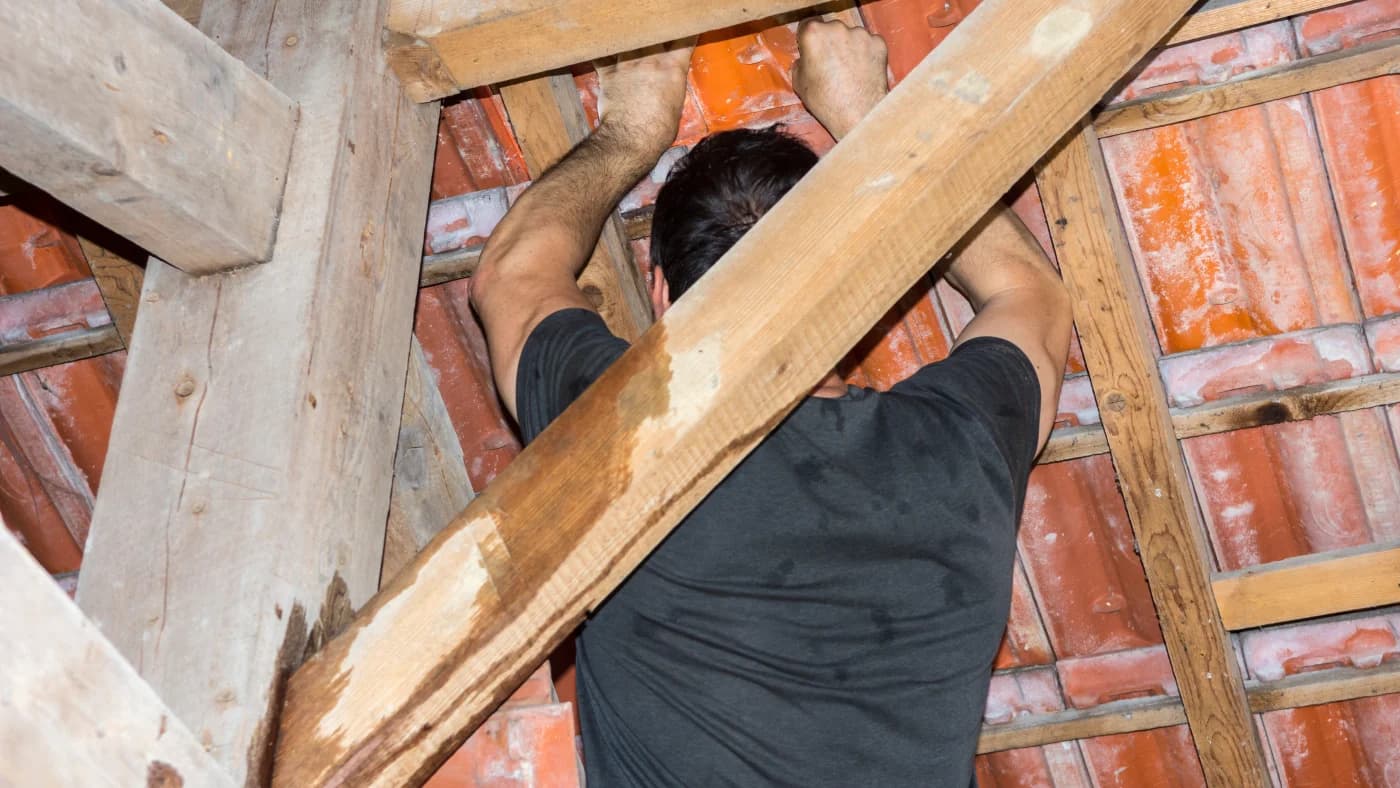
Moisture staining on the deck, ventilation adequacy, daylight where there should be none, and any sign of prior water travel. This is the half drive-by inspections skip, and it is where the truth usually lives.
5. Drainage
Valleys clear, water leaving cleanly, no ponding on low-slope sections.
What you should receive
- Photographs of what was actually found, and where
- A written condition report, yours to keep either way
- A plain statement of what is urgent, what is worth watching, and what is fine
- If work is recommended, an itemised scope — not a single number
Red flags
- A verdict delivered from the driveway without anyone going up
- Photographs that could be any roof — no context, no location on your house
- Urgency built around a deadline or a discount expiring today
- Pressure to sign before you have seen the report
- Reluctance to give you the report unless you commit
The honest outcome
Many inspections end with "your roof is fine — here is what to watch." That is not a wasted visit; it is the correct result on a healthy roof, and it gives you a documented baseline to compare against after the next storm. Ours is free, takes about an hour, and the report is yours regardless.
Related: roof inspections · the 4-point inspection · wind mitigation.

Universal Roof & Contracting
Florida roofing contractors since 1993
Three generations, family-owned, working Florida roofs from offices in Orlando, Tampa and Jacksonville. Everything here comes from what our crews actually find on roofs in this state — not from national roofing advice that assumes a milder climate.
Questions people ask
What does a free roof inspection include?
The covering, every flashing and penetration, the roof edge (soffit, fascia, gutters), the attic side, and drainage — finishing with photographs and a written condition report you keep whether or not you hire anyone.
Is a free roof inspection really free?
Ours is: no fee, no obligation, and the report and photographs are yours even if we never hear from you again. Be wary of anyone whose free inspection always discovers expensive work.
How long does a roof inspection take?
Usually about an hour for a typical home, longer for large, steep or complex roofs. The attic portion matters as much as the roof itself, so an inspection that never goes inside is incomplete.
How often should I get my roof inspected in Florida?
Once a year, plus after any major storm. Florida's heat, storms and humidity are hard on roofs, and an annual baseline makes post-storm damage far easier to identify and document.
Do I need to be home for a roof inspection?
Not for the roof itself, but attic access is a meaningful part of a real inspection — so it is better if someone can let the inspector inside. Ask what the report will cover if that is not possible.
What if the inspection finds nothing wrong?
That is a common outcome, and a good one. You get a documented baseline of your roof's condition, which is genuinely useful the next time a storm passes and you need to show what changed.