Listen to this guide
Narrated edition
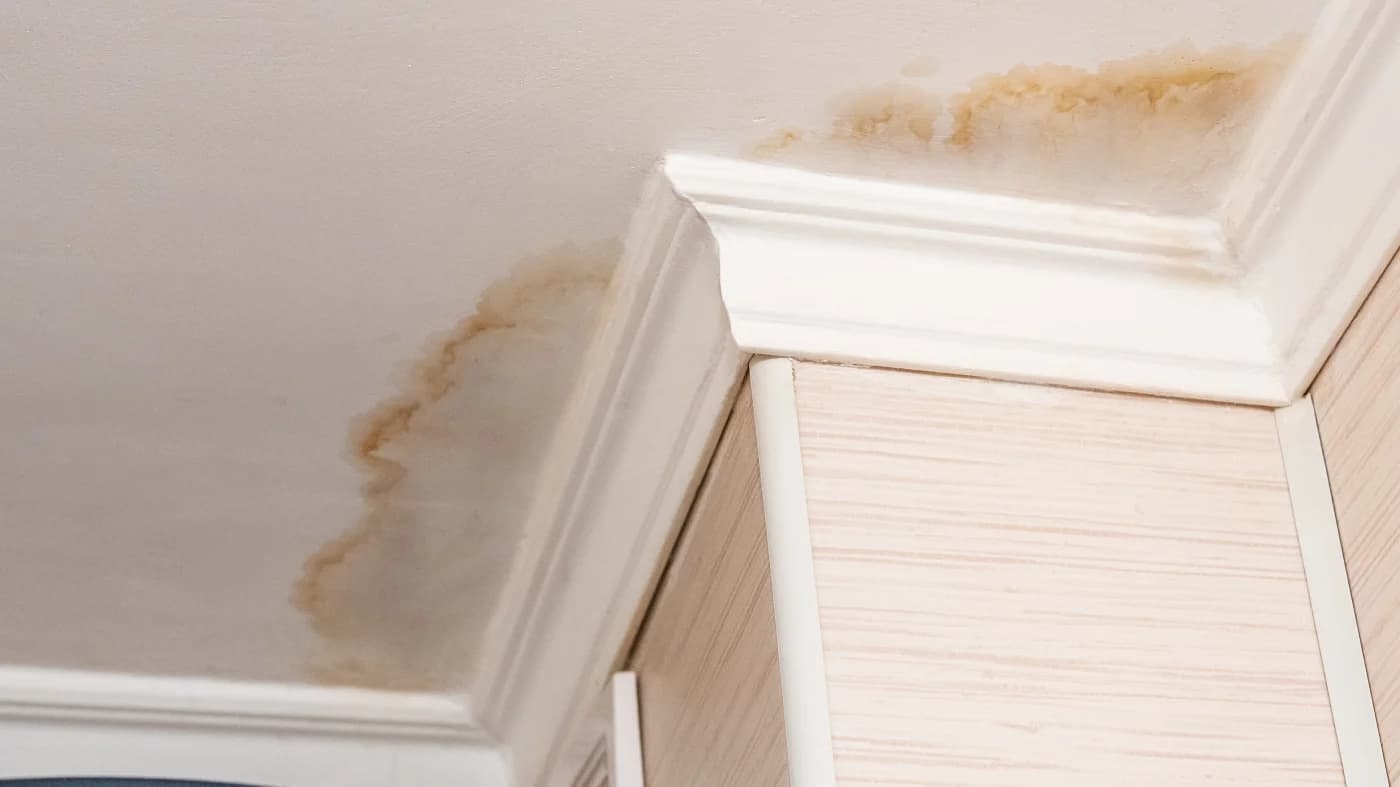
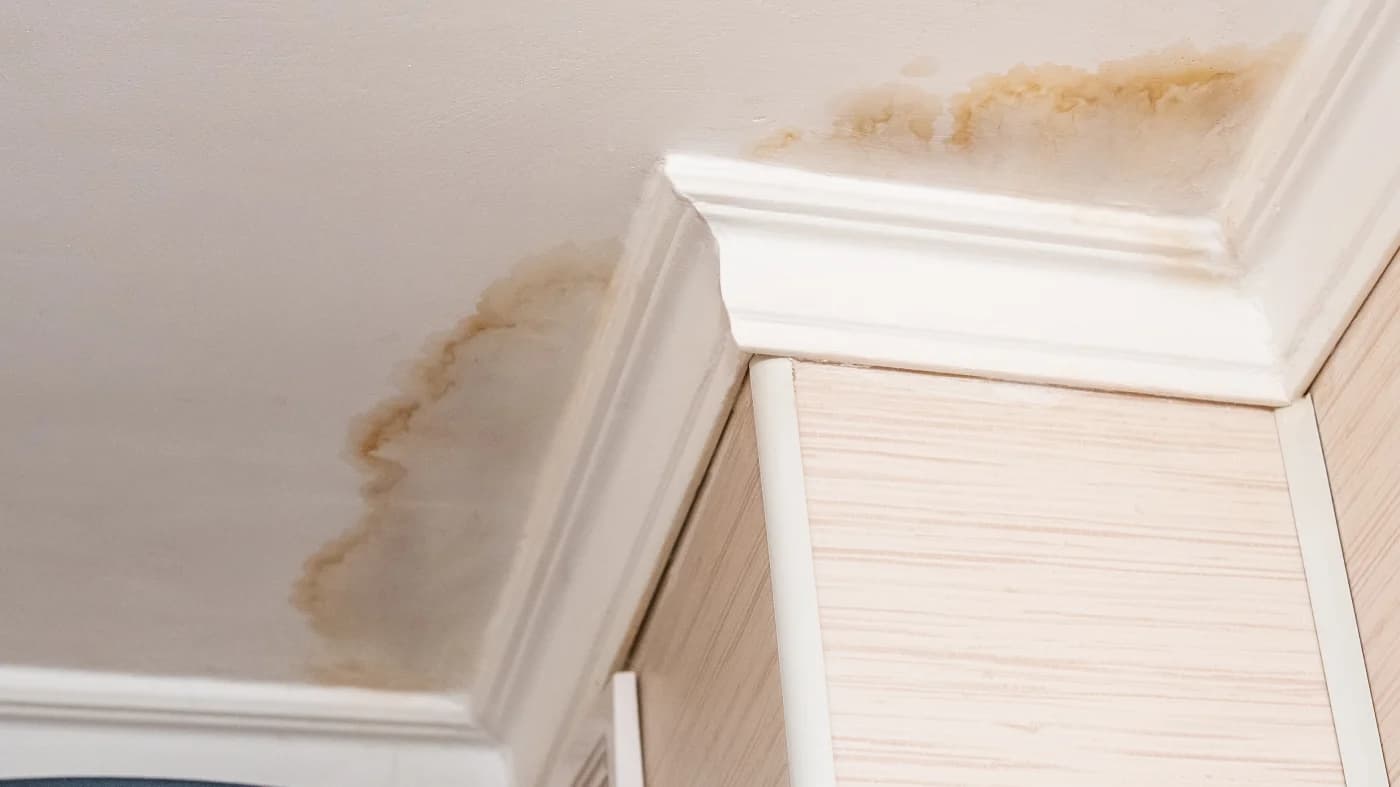
The entry point of a roof leak is often not directly above the stain: water enters at a penetration or flashing detail, runs along the underside of the decking or down a rafter, and drops at the first low point it reaches. Tracing it means working backwards from the stain, uphill, from inside.
Start in the attic, not on the roof
Post-storm decking can be compromised in ways you cannot see, and nothing worth checking requires climbing. Take a torch into the attic during or just after rain if you can, and look for:
- Wet or darkened decking, and follow the dark trail upward — water runs down, so the source is above the highest wet point
- Damp or matted insulation, which often marks the drop point rather than the entry
- Rusted nail shanks, which show where water has been repeatedly reaching the underside
- Daylight at penetrations, valleys or the ridge
- Staining on the sides of rafters, indicating water running along them
The usual suspects, in order
In roughly the order we find them:
- Vent and pipe boots. Rubber collars around plumbing vents crack under Florida UV. Cheap to fix, extremely common.
- Flashing. Chimneys, wall junctions, skylights. See what roof flashing is.
- Valleys. Where debris collects and water concentrates.
- Nail pops and lifted fasteners. Small paths, especially after wind.
- The roof edge. Missing or wrong drip edge putting water behind the gutter.
- The covering itself. Last, not first — a hole in open field is the rarest of these.
Clues from timing
When a leak appears narrows it down considerably:
- Only in wind-driven rain: flashing or an edge detail — water is being pushed sideways under something
- Every rain, immediately: a direct opening, often a boot or a hole
- Hours after rain stops, or days later: water pooling somewhere and finding its way slowly — sometimes not a roof leak at all but condensation or an HVAC issue
- Only in heavy prolonged rain: often drainage — blocked valleys, overflowing gutters backing water under the edge
What not to do
- Do not go up on a wet roof. Falls are how homeowners get hurt over something a professional can check safely.
- Do not seal from inside. Sealing the drip point traps water in the assembly and hides the damage while it spreads.
- Do not assume the stain marks the spot. Repairing above the stain is how people pay twice.
When to stop and call
If water is actively coming in, if the stain is spreading, or if you cannot trace it in twenty minutes of looking, get eyes on it. Our inspection is free, includes the attic side, and comes back as photographs and a written report — which on a leak hunt is the whole value, because you can see exactly where it enters and where it travels.
And once the entry point has a name, so does the price — what roof leak repair costs, by cause, by size, and by roof type, is the next read.

Universal Roof & Contracting
Florida roofing contractors since 1993
Three generations, family-owned, working Florida roofs from offices in Orlando, Tampa and Jacksonville. Everything here comes from what our crews actually find on roofs in this state — not from national roofing advice that assumes a milder climate.
Questions people ask
How do I find where my roof is leaking?
Start in the attic, not on the roof. Find the wet area on the decking and follow the dark trail upward — water runs downhill, so the entry is above the highest wet point. Check vent boots, flashing and valleys first; the open field is the rarest source.
Why is the leak not directly above the water stain?
Because water enters at a penetration or flashing detail, then runs along the underside of the decking or down a rafter before dropping at the first low point. Repairing directly above the stain is how people end up paying twice.
What is the most common cause of a roof leak?
Cracked vent boots — the rubber collars around plumbing vents — followed by flashing failures at chimneys, walls and skylights. Both are cheap to fix and both are invisible from the ground.
Should I go on my roof to find a leak?
No, especially not while it is wet or after a storm. Everything useful can be checked from the attic or by a professional, and roof falls are a serious injury risk for homeowners.
My ceiling only stains in heavy wind — why?
That pattern points to flashing or an edge detail: water is being driven sideways under something that sheds ordinary vertical rain fine. It is one of the most useful clues you can give an inspector.
Can I temporarily stop a roof leak myself?
You can catch water and protect belongings, and that is worth doing. Do not seal the drip point from inside — that traps water in the assembly and hides spreading damage. Tarping belongs on the outside and is safer left to someone with the equipment.