Listen to this guide
Narrated edition
Roof leak repairs in Florida range from a few hundred dollars for a single vent boot or flashing detail to several thousand when water has reached the decking.
And yet three quotes for one leak can differ by thousands of dollars. Both things are true at once, and this article is about why. The short version: a leak repair is priced by what the water touched, not by the hole it came through — and until someone opens the roof or walks the attic, every quote is a different guess about that answer.
The ranges up front
| Severity | Typical cost | What that looks like |
|---|---|---|
| Minor repair | A few hundred dollars | One entry point — a vent boot, a flashing detail, a few shingles |
| Moderate repair | More, as the water spreads | Water has traveled — larger sections, soffit or fascia, interior damage |
| Major repair | Several thousand dollars | Decking or structure involved, multiple areas open |
One more thing worth knowing before anyone climbs a ladder: many roofers charge a minimum call-out fee. That is why a fifteen-minute vent-boot swap still costs real money — you are paying for the truck, the ladder, the licence, and the trip, not the fifteen minutes.
Why three quotes for one leak can differ by thousands
Because the quotes are not pricing the same job — each one is a different guess about how far the water traveled.
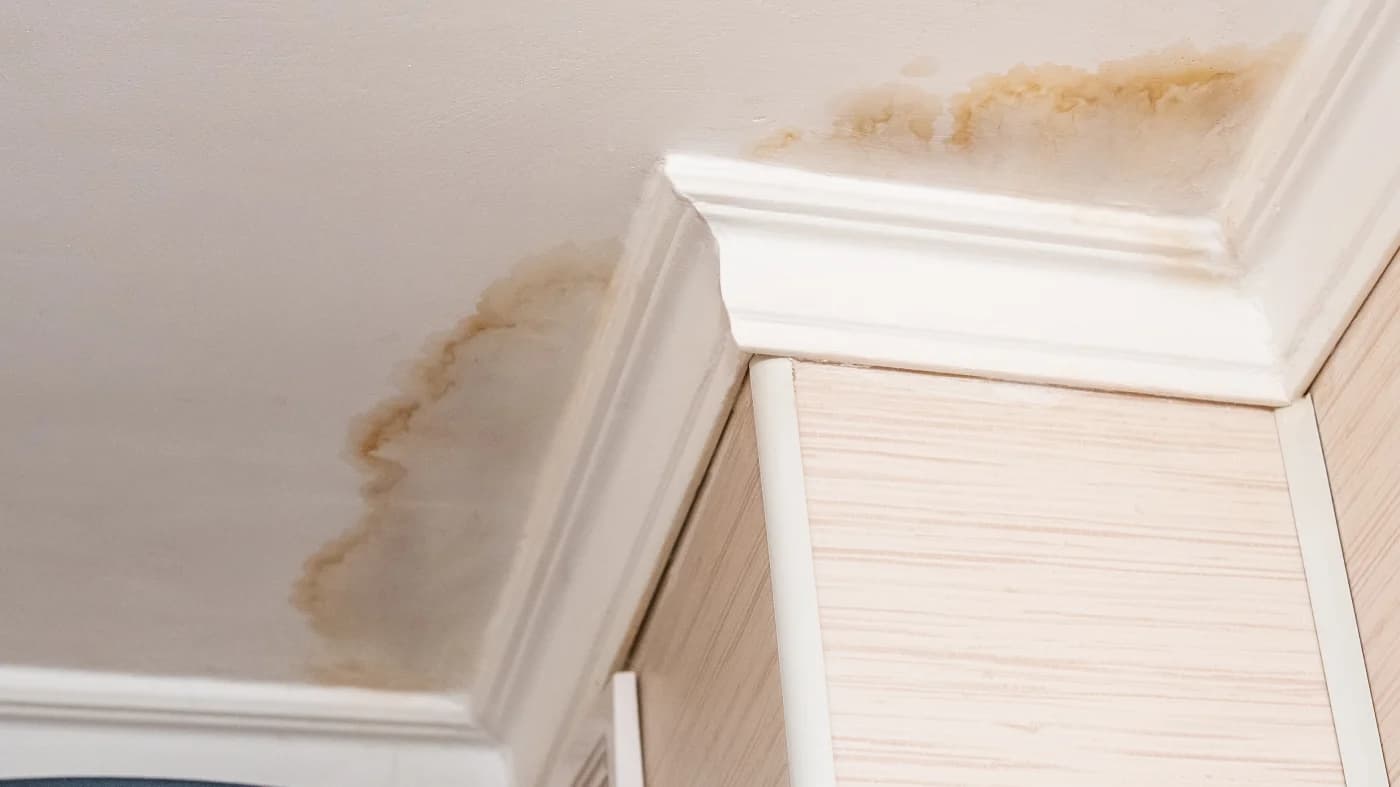
The same stain on the same ceiling can sit over a small area of damage or a large one, and the price follows the area, not the stain. The roofer who quoted low believes the water came straight down; the one who quoted high believes it has been running along the decking for two summers. Neither number means anything until someone names the entry point and the spread — which is why the useful move is not collecting more quotes, it is making every quote price the same diagnosis: photographs, the entry point named, and a written scope. Water often drops somewhere other than where it gets in — it travels along decking and framing before it shows — so a quote priced off the stain alone is priced off the wrong spot.
What actually failed
Two things stand out. First, a common culprit is flashing, not shingles — flashing seals every joint and penetration on the roof, and Florida's wind-driven rain finds those seams. Second, the cheapest fixes are real fixes: a boot, a length of sealant done properly, gutters cleared before the next storm. Not every leak is a roofing crisis.
One thing you can ignore entirely: Florida does not get ice dams.
The Florida wrinkles
Tile: a leaking tile roof is usually not a tile problem. Concrete and clay tile last 50 years and more (HUD's planning tables use 60 years for a tile roof), and the underlayment beneath it is what keeps water out, so the honest repair is often replacing the underlayment and relaying the original tile — a job that costs far less than a new tile roof, because the original tile goes back on. Be wary of anyone who hears "tile leak" and quotes the whole roof.
Metal: many metal-roof leaks are fastener or seam work — targeted, repair-friendly, and almost never a reason to talk replacement on a roof with decades of life in the panels.
Flat sections: where a leak follows standing water, the water is the diagnosis — ponding has its own causes and fixes, and patching the membrane without addressing them buys one season at best.
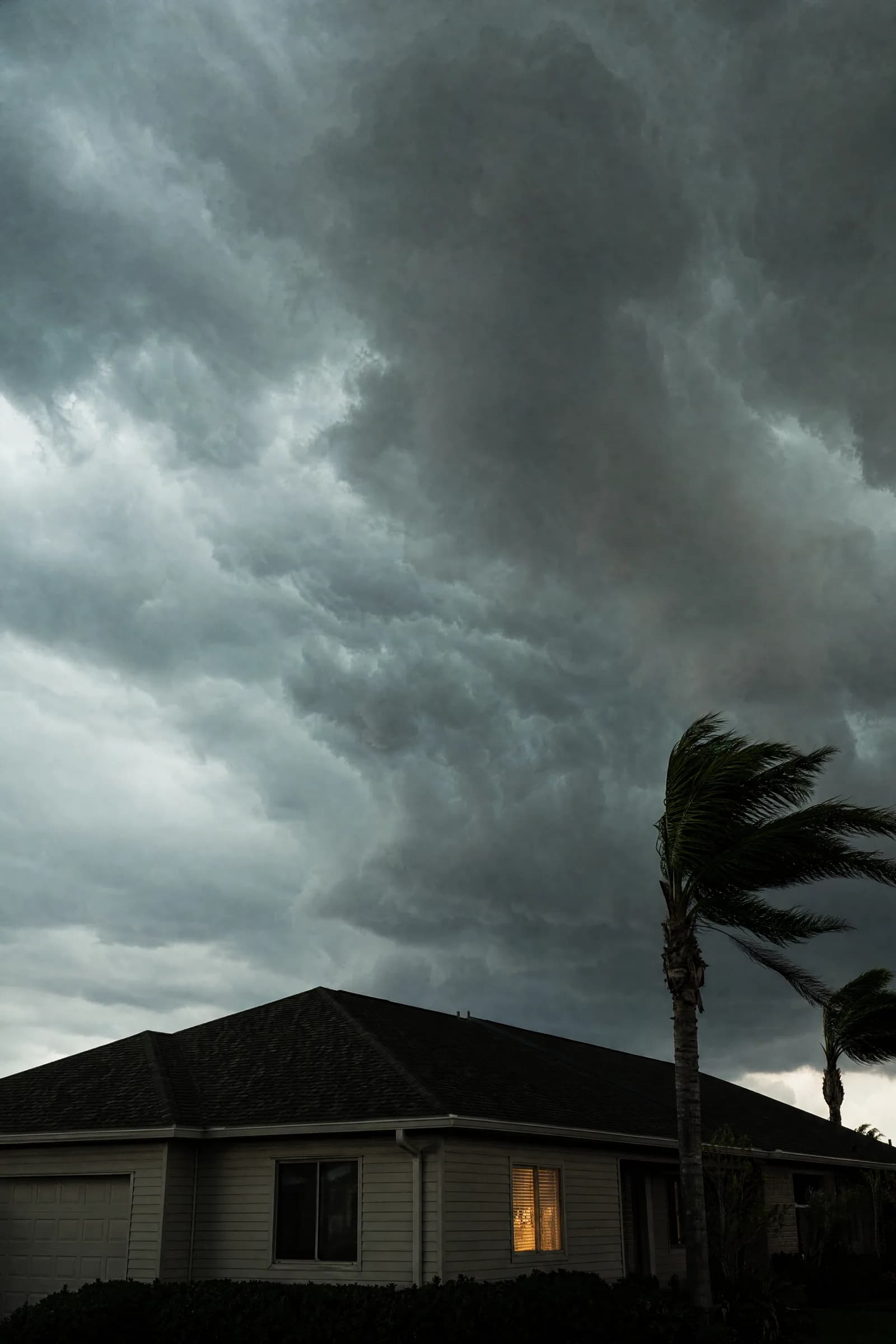
The calendar: in the summer rainy season, showers and thunderstorms come almost daily, so the next storm is days away, not weeks. If the roof is open and the sky is not, a same-day tarp, a small cost next to the interior damage it prevents, bridges you to the repair without betting the drywall on the forecast.
How a small repair becomes a big one
Waiting is the multiplier. The small boot repair and the several-thousand-dollar repair are frequently the same leak at different ages: water that entered at one point spends months delaminating decking, soaking insulation, and walking down framing. Every month it runs, the job moves down the severity table — same entry point, bigger opening, more sheets of decking, which three of the four bidders in a recent Florida public reroof bid priced at roughly $105 to $160 per 4×8 sheet.
Two situations deserve a flag before you authorize a large repair. If the damage is broad and your roof predates the 2007 Florida Building Code, the 25% rule can turn a big repair into a code-mandated conversation about the whole roof — better to know before the work starts. And if this is your second or third repair on the same roof in a couple of years, add up what you have already spent; the arithmetic often argues for putting the money into the roof you will keep.
Where the money actually goes
On most leak repairs the bill is labor, and the labor is mostly diagnosis and rebuild — not the patch itself. A properly done repair walks through the same sequence whatever the price: trace the water to its entry point, open the covering around it, replace what the water ruined underneath, rebuild the detail that failed, tie the covering back in so the repair sheds water by shape, and then prove it — a hose test, not a promise. A small repair is a couple of hours of that sequence; a large one is the same sequence with several sheets of decking in the middle of it.
Two honest cost drivers hide inside that sequence. Access is one — a steep pitch or a second story adds setup, staging, and time to every step, which is why identical failures price differently on different houses. The other is the condition of the covering around the repair: older, brittle shingles can crack when lifted, so the tie-in zone grows, and on tile the crew is walking and relaying material that does not forgive shortcuts. Neither of those is padding. Both belong in the written scope, priced, before work starts.
What you can safely do yourself
The homeowner jobs are the ones done from a ladder's lower half or inside the house: keep gutters and downspouts clear ahead of storm season — cleared gutters are sometimes the whole fix — contain water inside, move what the drip can ruin, and photograph everything for whoever does the permanent work. All of that is free or nearly so, and all of it makes the repair cheaper.
What does not belong on your list: walking the roof, and sealant. Wet shingle and tile are how homeowners get hurt, and a tube of caulk over a failed detail is an expensive shortcut — it hides the entry point while the water keeps traveling, then adds a cleanup step to the real repair. The call-out fee is not a tax on small problems; it is what keeping your feet on the ground costs, and it is cheap for what it buys.
Getting a number you can trust
- Make every quote price the same diagnosis. Entry point named, photographs shown, written scope. If the diagnosis is "somewhere around the chimney," the number under it is a guess.
- Ask for the per-sheet decking rate up front. Every leak repair has an unknown under it; an honest quote prices the unknown instead of hiding it.
- Ask what the minimum fee covers. It should be stated, not discovered.
- Ask what happens if it is worse than it looks. A contractor who has thought about your roof has an answer ready.
- Verify the licence — Florida makes it a two-minute lookup, and it filters more bad outcomes than any negotiating tactic.
Our part in that: the inspection is free, it covers the attic side, and it comes back as photographs and a written report you keep — whichever repair path you take, with us or without us. Call 407-214-4872.
The ranges on this page are planning guidance, not a quote — your roof, pitch, access, and the water's travel decide the real one.

Universal Roof & Contracting
Florida roofing contractors since 1993
Three generations, family-owned, working Florida roofs from offices in Orlando, Tampa and Jacksonville. Everything here comes from what our crews actually find on roofs in this state — not from national roofing advice that assumes a milder climate.
Questions people ask
How much does it cost to repair a roof leak?
Repairs range from a few hundred dollars for a single vent boot or flashing detail to several thousand when water has reached the decking. Expect a minimum call-out fee regardless of size, and ask what it covers before anyone climbs a ladder.
What is the cheapest way to fix a leaking roof?
Get the diagnosis right and fix the actual failure — the cheapest real repairs are a vent boot, resealing a penetration, or clearing the gutters that were backing water under the edge. The false economy is smearing sealant over the symptom: it hides the entry point while water keeps moving. And climbing up yourself trades a call-out fee against a fall — leave the roof walking to a crew.
How serious is a small roof leak?
More serious than it looks, because the size of the drip says nothing about the path the water is taking. A small leak that runs for months delaminates decking, soaks insulation, and travels along framing — which is how a small fix becomes a several-thousand-dollar one. The repair cost tracks the area the water touched, so time is the multiplier. Small leak, fast response is the cheap combination.
Can you fix a roof leak without replacing the whole roof?
Usually, yes. Most leaks are point failures — a boot, a flashing detail, a valley, a shingle section — and they repair cleanly on a roof that is otherwise sound. The exceptions: a roof failing in multiple unrelated places, decking that is wet across a meaningful area, or extensive damage on a roof that predates the 2007 Florida Building Code, where the 25% rule can require bringing the whole roof to current code. Those cases deserve the repair-or-replace conversation before any work starts.
Why do roof leak repair quotes vary so much?
Because each quote is a different guess about how far the water traveled. The same ceiling stain can sit over a small area of damage or a large one, and the price follows the area, not the stain. Until every contractor is pricing the same diagnosis — entry point named, photographs, written scope — the numbers are not comparable. Fix the diagnosis first and the quotes converge.
How much does emergency roof leak repair cost?
Emergency work costs more than scheduled work. If the weather has not cleared, a professionally anchored tarp is a small cost next to the interior damage it prevents, and it bridges you to the permanent repair. The tarp-plus-repair path usually beats waiting for a clear week while water keeps running.