Listen to this guide
Narrated edition
On the Jacksonville coast, salt air goes after a roof's metal parts first. FEMA warns that coastal environments are conducive to rapid corrosion of metals, so exposed fasteners, drip edge, valley metal and flashing can be finished while the covering itself still looks sound.
Why the metal parts go first near the water
Salt aerosol carries inland on the prevailing wind and settles on everything. It does not care much about a coated shingle or a quality panel finish, but it corrodes exposed fasteners, drip edge, valley metal and flashing steadily. Beaches, Ponte Vedra, Atlantic Beach, Neptune Beach and the intracoastal neighbourhoods all live with it.
What that looks like in practice
- Rust weeping from fastener heads on exposed-fastener metal roofs, streaking the panel below
- Flashing that has thinned or perforated at valleys and wall transitions while the field looks fine
- Drip edge failing before anything else, letting water behind the gutter into the fascia
- Gutter seams and hangers corroding early, which changes pitch and causes overflow
- Shingle roofs losing their nails' holding power even where the shingle itself has service life left
What actually helps
Material selection
Aluminium over steel for coastal metal work. Stainless or properly coated fasteners rather than standard. Aluminium fascia and seamless aluminium gutters at the edge. These choices cost more up front and are worth it near salt water.
Concealed fasteners
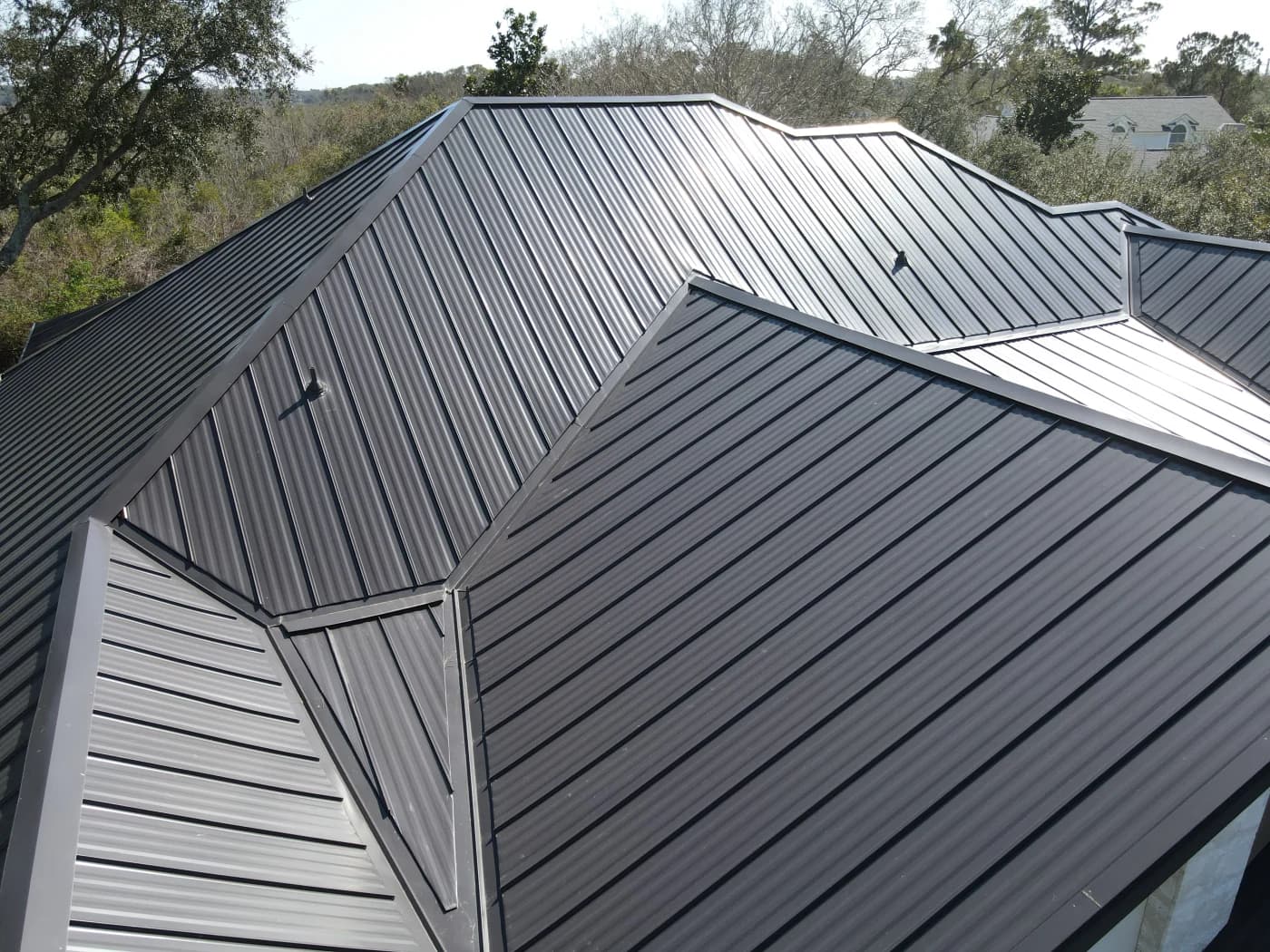
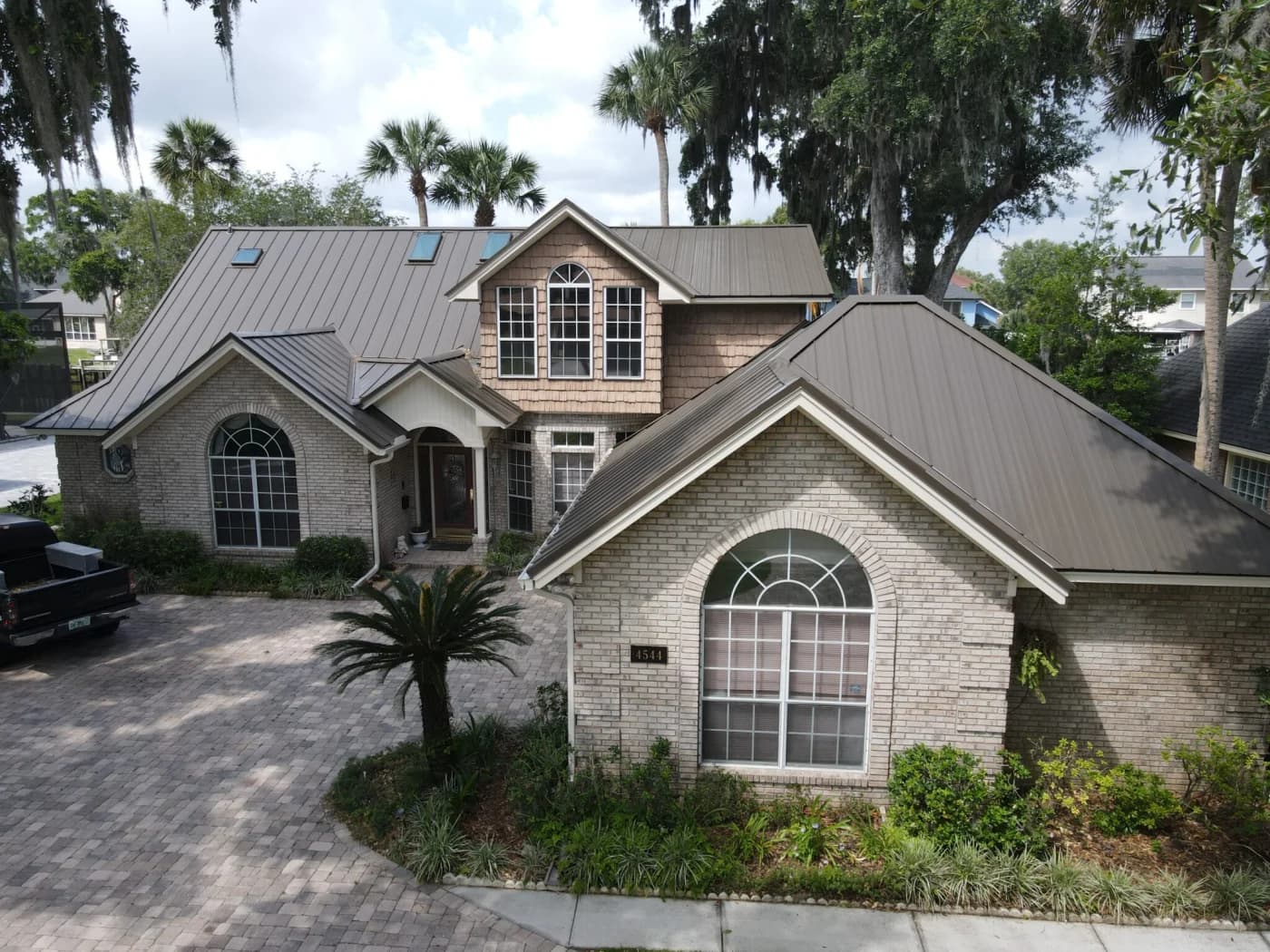
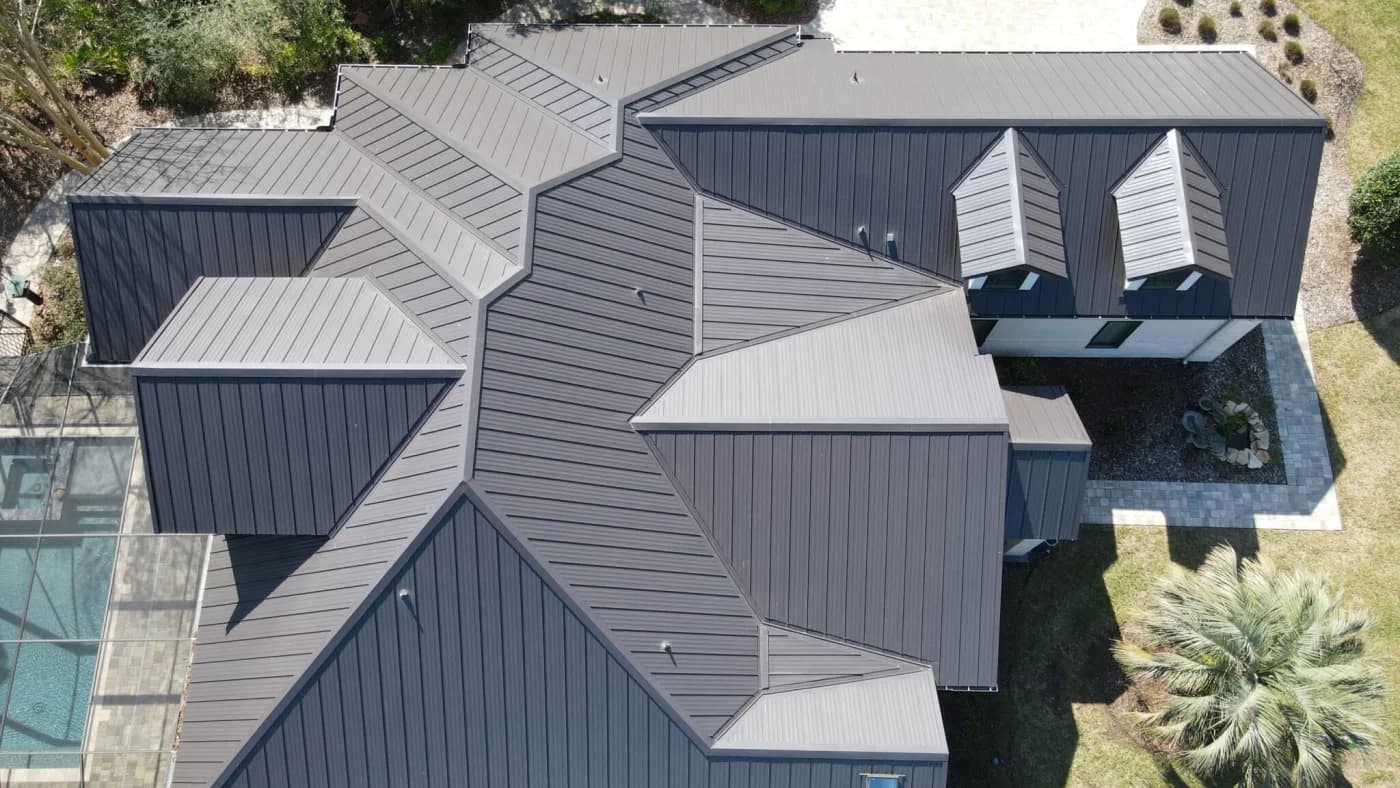
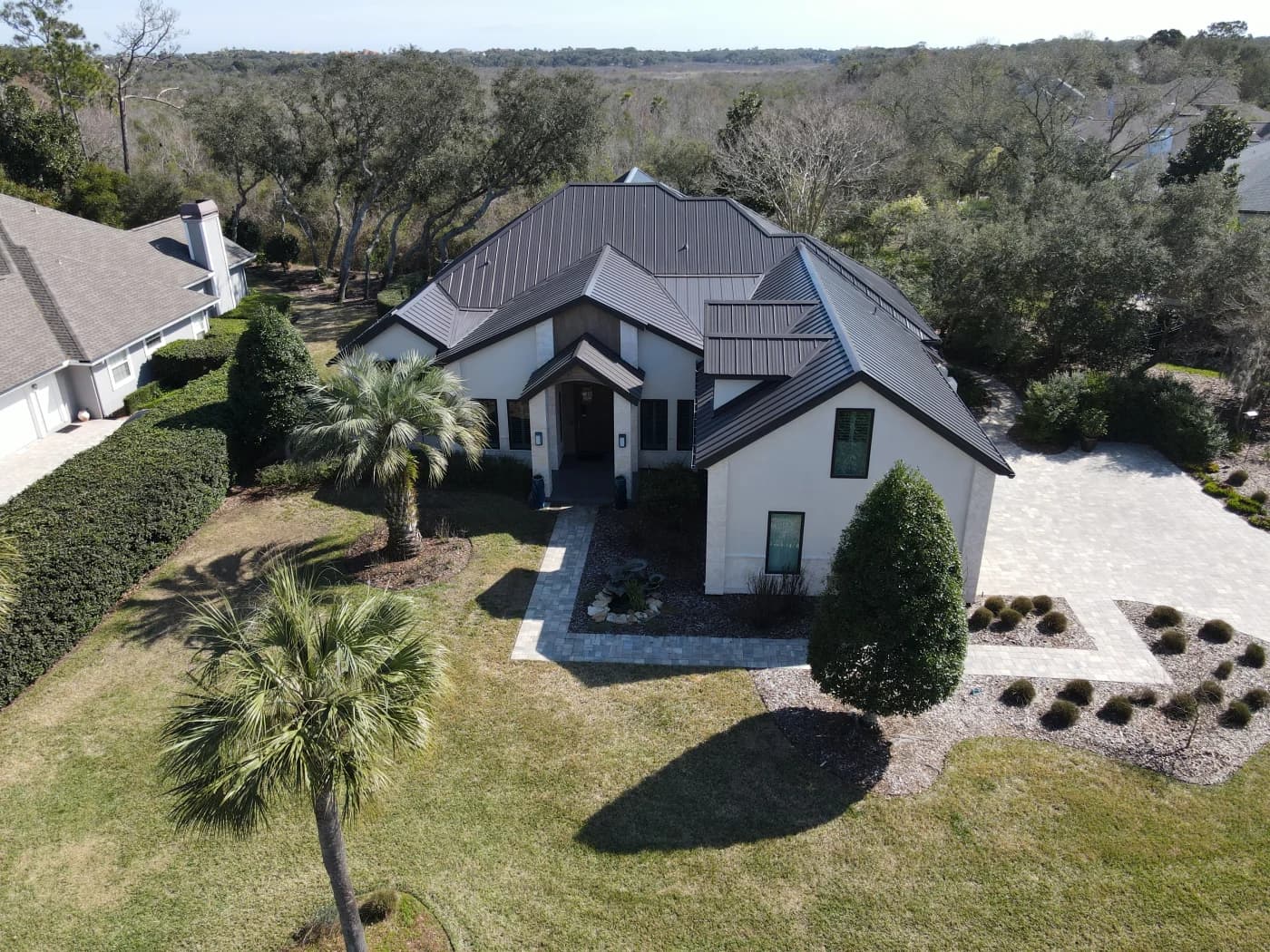
Standing seam hides its fixings beneath the seam, which removes the most corrosion-prone components from the exposed surface entirely. It is the reason we specify standing seam rather than exposed-fastener panels for coastal Jacksonville work.
Rinsing
Where practical and safe, rinsing salt off a coastal roof removes accumulated salt from fasteners and flashing. It is cheap maintenance, and it is easy to skip.
Inspecting the right things
A coastal inspection should spend its time on fasteners, flashing and the roof edge — not just the covering. An inspector who reports "shingles look good" on an oceanfront roof has not finished the job.
The upside
Because the covering often still has life, coastal failures are frequently repairable rather than total. Replacing flashing, drip edge and fasteners on a sound roof is a fraction of a replacement — provided it is caught before water has been getting in long enough to reach the decking.
Related: Jacksonville roofing · coastal metal roofing.

Universal Roof & Contracting
Florida roofing contractors since 1993
Three generations, family-owned, working Florida roofs from offices in Orlando, Tampa and Jacksonville. Everything here comes from what our crews actually find on roofs in this state — not from national roofing advice that assumes a milder climate.
Questions people ask
How does salt air damage a roof?
It corrodes small exposed metal components: fasteners, drip edge, valley metal and flashing. FEMA warns that coastal environments are conducive to rapid corrosion of metals, so near the Jacksonville coast the fixings often go first, while the covering itself still looks sound.
How far inland does salt air affect roofs?
FEMA treats the first 3,000 feet from the ocean, including sounds and back bays, as the zone where corrosion calls for stainless steel hardware. The closer to the ocean or intracoastal, the more material selection matters.
What roofing material is best for coastal Jacksonville?
Standing seam aluminium with a premium coating, or architectural shingle with corrosion-resistant fasteners and aluminium edge metal. The key is concealed or protected fixings rather than exposed ones.
Can a coastal roof be repaired instead of replaced?
Frequently, yes — because the covering often still has service life when the fixings fail. Replacing flashing, drip edge and fasteners costs a fraction of a replacement, provided water has not been reaching the decking.
Does rinsing a roof really help near the coast?
It removes accumulated salt from fasteners and flashing, and it is cheap maintenance. Only do it where it can be done safely — that usually means from the ground.
Why did my coastal roof fail early when the shingles look fine?
Because shingle appearance is not the whole roof. Nails can lose holding power and flashing can perforate while the covering still looks presentable — which is exactly why coastal inspections must examine fixings and edge metal, not just the field.